
Tuesday, 10 February 2015

Sunday, 23 November 2014
LICAF and digital comics


The discussion held was on digital comics and how they don't really exist yet. To begin with I was a bit taken back by the start of the lecture as I thought digital comics did exist in large numbers and there was no question about it. However my eyes were opened when it was made clear that they weren't discussing the digital versions of print comics, they meant a new type of medium that we haven't experienced yet.
I hadn't considered this but the ideas thrown about in the lecture were those of the capabilities of digital and how no one has fully explored them. McCloud has previously stated in his book (either Making/Reinventing comics, not sure exactly) that with the application of digital, you could view the comic through a 'window' as opposed to a page. He made a point of there being the capability of an infinite canvas that you'd be able to view as a continuous comic strip on screen. This is just one of many possibilities that can be used with the application of digital in comics.
Sound, animation in gif or in controlled movement, interactivity, control of pace, control of direction and a number of possibilities could be achieved in this supposed medium.
Below I'll copy out the notes I made, with an attempt to make sense of some of them.
Typed up notes from the lecture:
Discussion about digital comics with Scott McCloud and Daniel Merlin Goodbrey.
Scott McCloud, known for;
Reinventing Comics
Zot!
The Best American comics
Daniel Goodbrey, known for;
Electricomics
Tarquin?
Infinite Canvas
Hypercomics
Before the internet capabilities improved (speed), comics used to be put on to CD-ROMs
Problem with webcomics - scrolling, looking for navigation.
The dimensions of many webcomics are the "WRONG SHAPE!" - McCloud (very passionate about the matter) as they are usually intended for print. This results in portrait images being displayed on landscape orientated screens, meaning the viewer has to scroll to see the full image.
"You should never take your eye off the story" - McCloud
"swipe" comics. Reading comics on screen should require minimal effort between pages.
Discussion of single currency being essential for micropayments
bitcoin
Distributors of digital comics
- Izneo
- Thrillbent
- Tanapax
- Madefire
- Comixology
10-20% sales made digital
Mention of Daniel Goodbrey's digital comic work, a game called 'Icarus Needs' and mention of a game being made called 'The Empty Kingdom'
End of notes
Goodbrey's comic/game or digital comic 'Icarus Needs' can be found here
Asterios Polyp by David Mazzucchelli
Asterios Polyp by David Mazzucchelli is another graphic novel I plan to analyse the way Mazzucchelli has experimented with the form of the comic medium.
(Requires future update)

Mazzucchelli, D. (2009) Asterios Polyp. 1st edn. USA: Pantheon Books.


Building Stories by Chris Ware
It's a graphic novel in a box!

Ware, C. (2012) Building Stories. 1st edn. London & USA: Jonathan
Cape/Random House.

Box front

Box back

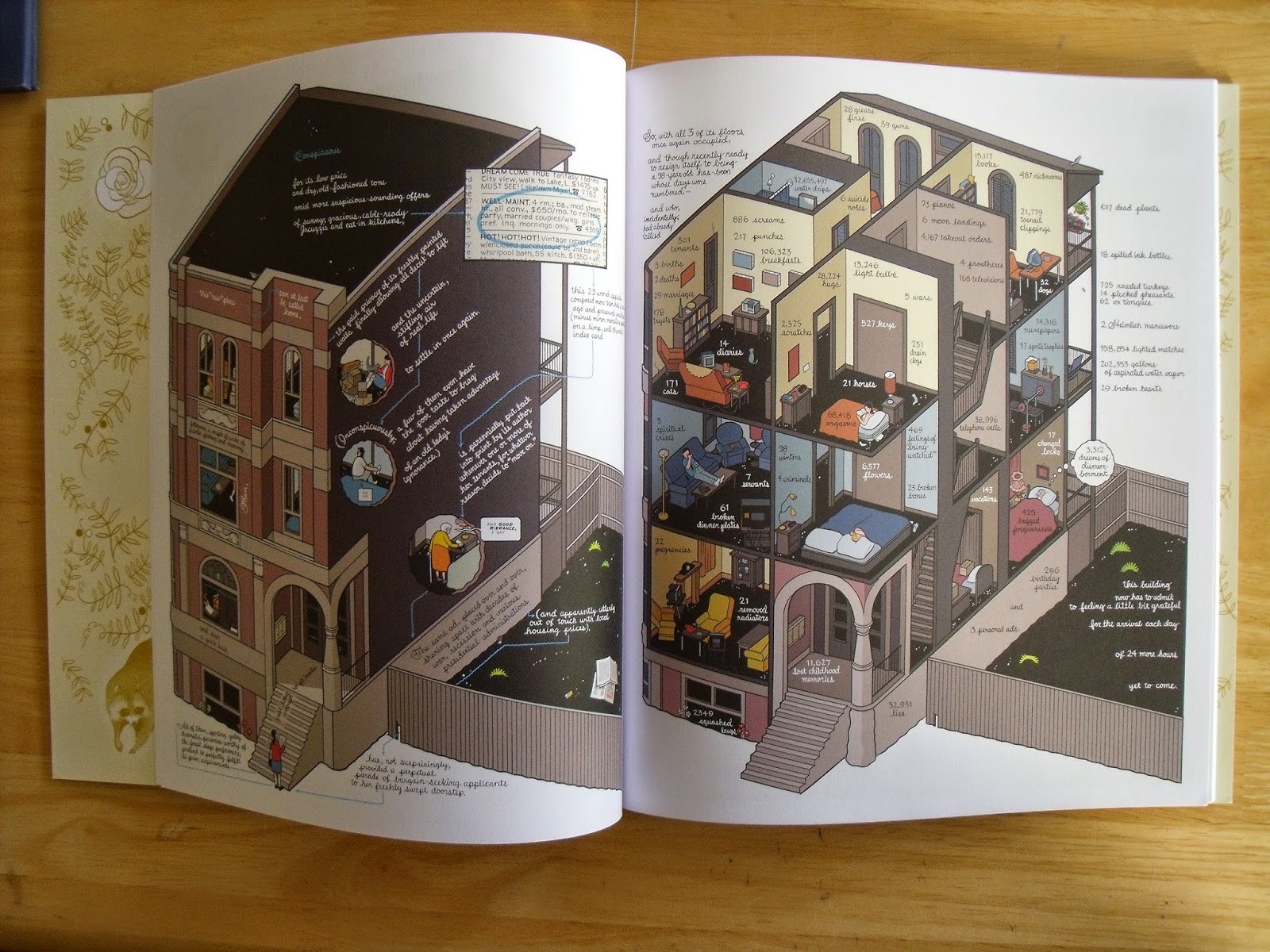
Building Stories by Chris Ware is a graphic novel. As stated in the photo, there are 14 varying formats of the comic medium inside that are all part of the same collected graphic novel. This is an unusual approach to the presentation of the medium as it's usually within a book or zine format. Building Stories encompasses a range of formats from strips, zines, magazines, newspapers and hardback books. All of which I've tried to photograph below.




This was a quote sticker attached to the packaging which nicely sums up the brilliance of Building Stories.
"Chris Ware's Building Stories is the rarest kind of brilliance; it is simultaneously heartbreaking, hilarious, shockingly intimate and deeply insightful. There isn't a graphic artist alive or dead who has used the form this wonderfully to convey the passage of time, loneliness, longing, frustration or bliss.
It is the reader's choice where and how to begin this monumental work - the only regret you will have in starting it is knowing that it will end." - J. J.Abrams
I will be analysing this graphic novel for my essay, in regards to Ware experimenting with the form of the medium. From first impressions it's more of an unconventional use of physical format as opposed the approach to the composition of the page. However I'll have more to say once I've read the entirety of the material.
McCloud and Groensteen
A couple of books that I'm looking at: Understanding Comics by Scott McCloud and The System of Comics by Thierry Groensteen. Understanding Comics is a study of comics in comic form. What better way is there to explain the medium than through the medium itself (maybe not applicable in all cases).
McCloud has a couple more books of similar names (Reinventing Comics and Making Comics).

McCloud, S. (1994) Understanding
Comics: The Invisible Art. HarperCollins Inc, New York, USA.
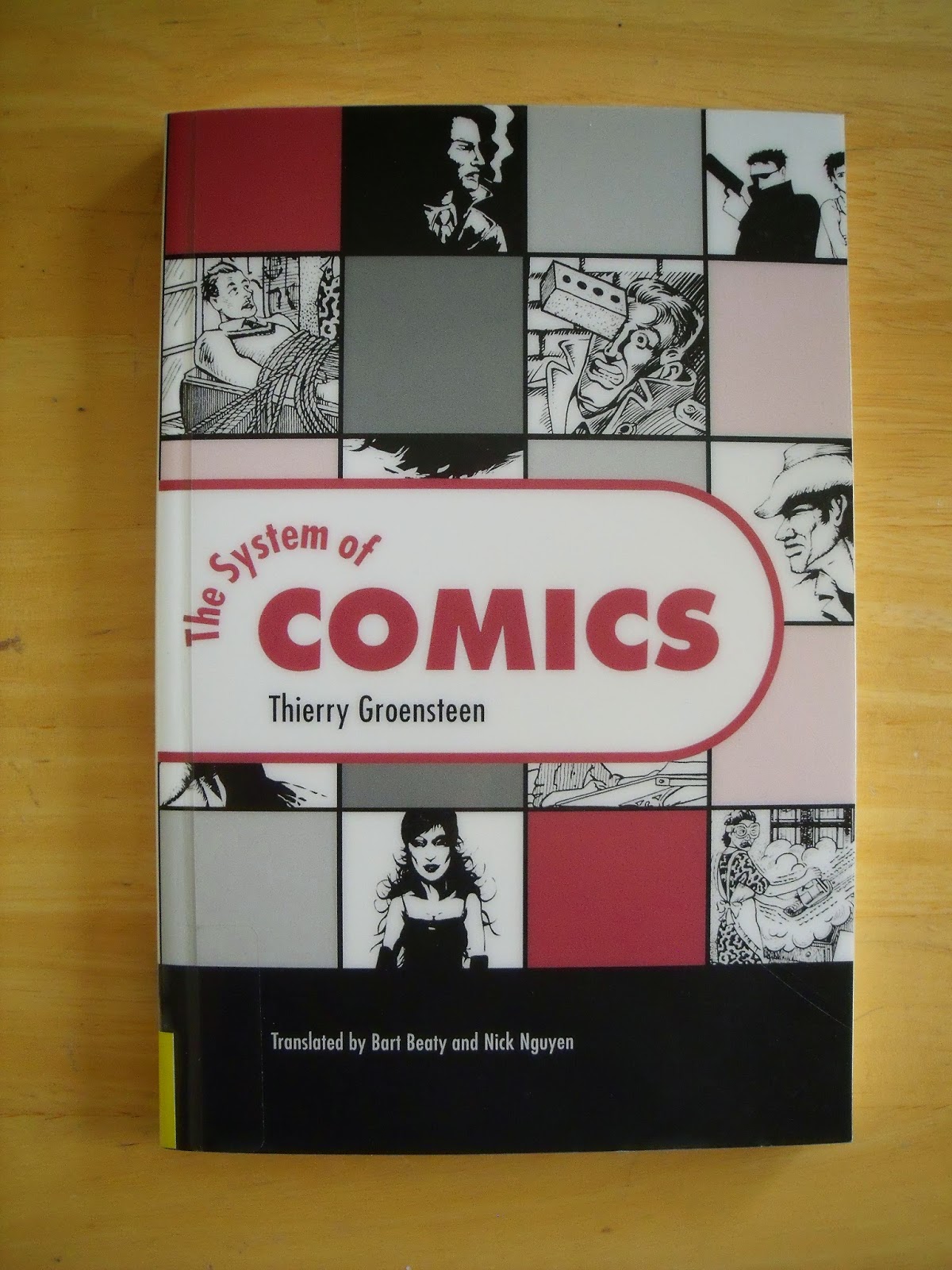
Groensteen, T. (2007) The
System of Comics. Print on demand edn. Jackson: University Press of
Mississippi, USA.
Will Eisner: Graphic Storytelling...


Scan from the book's introduction.
“Since comics are easily read, their reputation for usefulness has been associated with people of low literacy and limited intellectual accomplishment.”

A quotation that I think will be useful for my essay. Eisner continues to state that this has been mirrored in the work that has been produced; comics are easy to read, therefore let's make comics for children because they're not so good at reading. This shouldn't dictate the direction of the whole medium, it limits the capabilities of the raw potential inherent in the harmony of text and imagery.

One of my previous posts was on terminology, my definitions of these terms are roughly similar to Eisner's as he puts them at the end of this book's introduction.


Subscribe to:
Posts (Atom)
